Stucco Inspections: What They Involve and How to Read the Report
A stucco inspection tells you what is happening behind your walls. What it doesn’t tell you is what to do about it — and that gap is where most homeowners either overspend or do nothing.
A stucco inspection is a specialist assessment of whether moisture is getting behind your cladding and damaging the structure underneath. It comes in three levels of increasing thoroughness, and it produces a report of findings — not a plan of action. Understanding the difference between those two things is what this guide is about.
We should be direct about our position here: JARART LLC does not perform stucco inspections. We are a contractor, and we think inspection and repair should stay in separate hands for reasons covered below. What we do have is a decade of opening walls that inspection reports told us to open — which means we know what those reports mean in practice, and where homeowners get steered wrong after receiving one.
The Three Levels of Stucco Inspection
Inspections are not a single product. What you’re buying depends on the level, and the level determines what the results can actually tell you.
| Level | What happens | What it can establish |
|---|---|---|
| Level 1 Non-invasive |
Visual survey of the exterior, surface moisture scanning, sometimes infrared thermal imaging. No holes. | Where problems are likely. Identifies suspect areas and visible defects — missing flashing, failed sealant, improper terminations, inadequate clearances. |
| Level 2 Invasive |
Small holes, typically around a quarter inch, drilled at selected points. A probe reads moisture content directly in the sheathing behind the cladding. Holes are patched with matched sealant afterwards. | Whether moisture is actually present, and how much, at the points tested. |
| Level 3 Destructive |
A core sample removed — roughly the size of a coin — to look directly at the condition of the assembly. | The physical state of sheathing and framing where damage is already suspected. |
The important limitation: a Level 1 inspection cannot confirm or rule out concealed damage. Infrared and surface meters find anomalies worth investigating — they are screening tools, not answers. If a non-invasive inspection comes back with elevated readings and no further testing is done, you have a question, not a result.
In cooler, wetter climates invasive testing is standard practice, and a stucco inspection NJ homeowners commission here is close to expected to include it. This region had widespread stucco and EIFS failures through the 1990s and 2000s — extensive enough that “stucco remediation” became a recognised category of work here rather than a general term. Combined with 90 to 110 freeze-thaw cycles annually and over 45 inches of rain, the assumption in this area is that a surface look is not sufficient.
What the Numbers in Your Report Actually Mean
Level 2 reports come back as moisture content readings, mapped by location. Homeowners frequently receive a list of percentages with no explanation of what separates a fine reading from an alarming one.
The underlying building science is straightforward. Wood decay fungi need sustained moisture content above roughly 20% to become active. Below about 15%, wood is generally in no danger. Between those figures is a zone where the wood is wetter than it should be but not yet decaying — which is precisely when intervention is cheapest and most effective.
- Readings around 15% or below. Normal. The assembly is doing its job at that point.
- Readings in the high teens. Elevated. Water is reaching the sheathing from somewhere. Not yet structural damage, but the source needs finding — this is the useful window.
- Readings at or above 20%. Sustained moisture at a level that supports decay. Assume something has failed and needs opening to assess.
- Readings that vary sharply across one elevation. Often more diagnostic than any single number. A wall that reads normally except directly below one window is telling you exactly where the water enters.
A single elevated reading is a location to investigate. A pattern of elevated readings clustered around openings on one side of the house is a systemic detailing problem, and those two situations lead to very different scopes of work.
Everyone reads the moisture numbers. Fewer people read the visual findings section, and that’s usually where the actual cause is written down — missing kickout flashing, no head flashing over a window, stucco carried down below grade. The numbers tell you the wall is wet. The visual findings tell you why. If you fix what caused the readings, the readings resolve. If you only patch where the numbers were high, they come back.
Why Your Inspector Shouldn’t Be Your Contractor
This is worth stating plainly, and it is easier for us to say because we do not offer inspections.
An inspection report determines the scope of the repair that follows. If the same company writes the report and then quotes the work, the incentive structure is obvious — the assessment and the invoice have the same author. That does not mean anyone is acting badly, and plenty of firms that do both are entirely honest. But the independence is worth preserving, particularly on a job where the homeowner has no way to verify what is behind the wall.
The arrangement we’d recommend: an independent inspector produces the report, and you take that report to contractors for scoping and quotes. You keep the assessment as a fixed reference point, and any contractor proposing significantly more work than the report supports has to justify why.
Repair or Remediation: What the Findings Determine
Once you have a report, the question becomes which category of work you are in. The two get conflated constantly, and the difference is substantial.
Stucco inspection and repair are sequential, not simultaneous — the report defines which of two categories you are in. Repair addresses defined areas. Cracks, a section of damaged cladding, a failed sealant joint, a missing piece of flashing. The wall system stays substantially intact and specific defects are corrected.
Remediation means the cladding comes off across affected elevations, damaged sheathing is replaced, the weather barrier and flashing details are rebuilt correctly, and the wall is reconstructed. It is a different scale of job entirely and it is what the term means in this region specifically.
Broadly, isolated findings with contained readings point toward repair. Widespread elevated readings, confirmed sheathing damage, or a systemic detailing failure across an elevation point toward remediation. Anything in between is a judgement call, and it is a reasonable one to seek a second opinion on.
Two failure modes to be alert to after an inspection. The first is under-scoping — a proposal to seal, coat or patch the surface where the report documents moisture reaching the sheathing. That treats the symptom and leaves the cause running. The second is over-scoping — a proposal for full remediation of the entire house where the report shows problems on one elevation. Your report is the reference. Ask any contractor to point to what in it justifies the scope they’re proposing.
When a Stucco Inspection Is Worth Ordering
If you already own the house, the triggers are different from the pre-purchase case:
- Interior staining on an exterior wall or ceiling, or a damp smell that doesn’t resolve
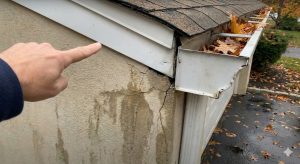
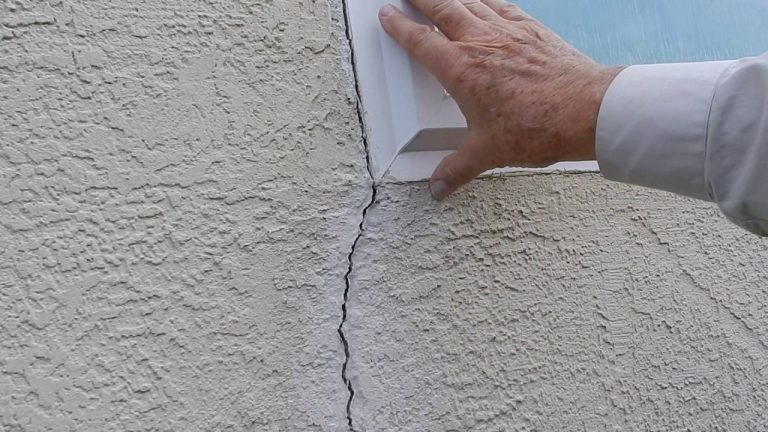
- Visible exterior signs — dark streaks below window corners, concentrated algae, bulging or soft areas, cracks wide enough to admit water
- EIFS on a house built before the late 1990s, if it has never been assessed
- Before selling, so that you control the timing and know what a buyer’s inspector will find
- Before committing to significant exterior work — repainting a wall that has moisture behind it wastes the money twice
If you are still in the buying process rather than owning, the sequencing and the negotiation options are different — that’s covered separately here.
Frequently Asked Questions
Originally from Poland, Kamil spent years mastering stucco and exterior finishing before founding JARART LLC in New Jersey. Over a decade of NJ and PA projects — from Mercer County residences to commercial work for Marriott and Hyatt and the BAPS Swaminarayan Akshardham Temple in Robbinsville, NJ, the largest Hindu temple in the USA. JARART LLC works with Senergy-Sika, Dryvit, Sto, Sherwin-Williams, Behr, Pecora and Benjamin Moore materials.