It starts with a musty smell in a corner room. Then, a small, dark stain appears on your interior drywall after a heavy New Jersey rainstorm. Panic sets in.
When homeowners in NJ and PA discover a leak in their stucco home, their first instinct is often to blame the stucco itself. They see hairline cracks on the facade and assume water is pouring right through the surface.
At JARART LLC, we have inspected thousands of homes across the region, and here is the uncomfortable truth: The stucco field itself is rarely the primary cause of a major leak.
If you are dealing with water intrusion, the problem is almost certainly where the stucco meets something else—windows, doors, or the roofline. The culprit isn’t the wall; it’s the flashing.
The Great Misconception: “Stucco is Porous”
Many people believe that because stucco (especially traditional hard coat) is porous, it acts like a sponge, soaking up rain until it leaks inside.
While it’s true that traditional stucco absorbs some moisture, it is designed to do so. A properly built stucco wall has a weather-resistant barrier (like tar paper) underneath it that stops that absorbed moisture from reaching the wood framing. When the sun comes out, the wall breathes and dries out.
So, if the wall can handle rain, where is the water coming from? It enters through gaping holes in the system’s armor—the transitions.
What Is Flashing and Why It Fails
Think of flashing as the “traffic controller” for rainwater on your home’s exterior. It is typically made of metal, vinyl, or specialized waterproof tapes installed underneath the stucco at vulnerable junction points. Its sole job is to direct water out and away from the structure.
When flashing is missing, installed incorrectly, or relies solely on cheap caulk that degrades over time, water finds a direct path behind the stucco system. Once behind the system, gravity takes over, and rot begins.
Here are the two most common culprits we see in stucco leak repair projects in NJ and PA:
Culprit #1: Failed Window & Door Transitions
This is the number one source of leaks.
Many older homes, or homes built quickly during boom periods, relied on a simple bead of caulk to seal the gap where the stucco meets the window frame.
The Problem: Vinyl windows expand and contract with temperature changes. Stucco does not. Within a few years, that cheap caulk dries, cracks, and pulls away. You might not even see the hairline gap, but wind-driven rain will find it.
The Solution: Proper window flashing stucco integration isn’t just about adding more caulk. It often requires integrating head flashing (above the window) and sill pans (below the window) that are tied into the weather barrier behind the stucco. When we repair these, we use high-performance sealants from trusted brands like Pecora or Dow that are designed to flex, not crack.
Culprit #2: The Missing “Kick-Out” Flashing
If you have rot on a wall located below where a roof gutter ends, this is almost certainly your problem.
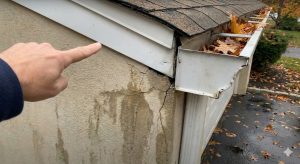
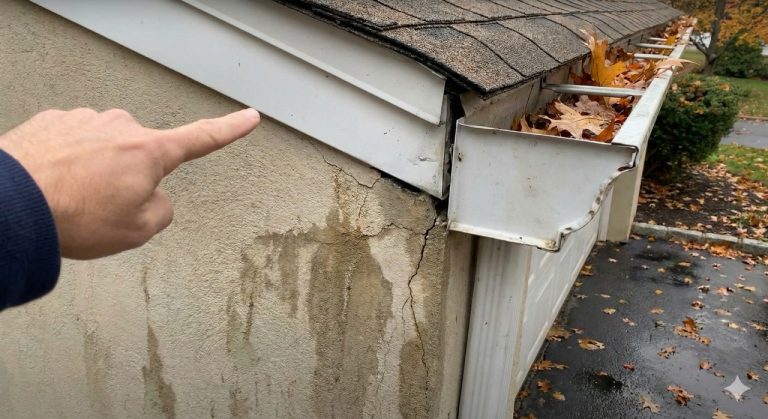
The Problem: Where a sloped roof meets a vertical stucco wall, gutters often dump thousands of gallons of concentrated roof runoff directly onto the stucco surface. Over time, this massive volume of water overwhelms the wall and pours behind it.
The Solution: A “kick-out” flashing is a small, angled piece of metal that literally “kicks” that roof water out into the gutter and away from the wall. It’s a cheap piece of metal, but its absence causes tens of thousands of dollars in structural damage.
The “Band-Aid” vs. The JarArt Cure
When faced with a leak, many contractors offer a cheap fix: they smear a layer of elastomeric paint over the hairline cracks on the wall and add a thick bead of caulk around the windows.
This is a band-aid. It might stop the leak for six months, but it traps existing moisture inside, accelerating the rot of your wood framing.
At JARART LLC, we don’t just patch; we diagnose.
Our approach to water damage repair in NJ involves:
- Finding the Source: We trace the leak back to the failed transition point (roof, window, or chimney).
- Surgical Opening: We often have to remove a small section of stucco around the failure point to expose the framing.
- Corrective Flashing: We install the proper metal or tape flashing that should have been there in the first place.
- Seamless Restoration: We rebuild the stucco layers, matching the texture and color so perfectly that no one will know we were there.
Don’t Ignore the Signs
Water damage doesn’t get better on its own; it gets more expensive. If you see staining on your interior walls or suspect a leak in your exterior, don’t wait for mold to grow.
Call the experts who know where to look.
Contact JARART LLC today for a professional consultation and free estimation. 📞 Call: (609) 375 7155 📍 Serving: New Jersey & Pennsylvania