Living in New Jersey or Pennsylvania, we experience it all: freezing winters, humid summers, and heavy storms. Your home’s exterior isn’t just about curb appeal—it’s the first line of defense against these elements.
If you are considering a new stucco facade or a renovation, you’ve likely encountered two main terms: Traditional Stucco (Hard Coat) and EIFS (Synthetic Stucco).
At JARART LLC, we often hear the same question from our clients: “Which one is better?”
The truth is, neither is “better” in every situation. The right choice depends on your property’s structure, your budget, and your energy efficiency goals. As certified installers with over 10 years of experience working on everything from local homes to the BAPS Swaminarayan Akshardham Temple, we’re here to break down the differences so you can decide with confidence.
What is Traditional Stucco (Hard Coat)?
Traditional stucco is a time-tested system that has been used for centuries. It is a cement-based siding comprised of sand, water, lime, and Portland cement.
How it works:
It is applied over a wire mesh (metal lath) and a weather-resistant barrier (felt paper) attached to your home’s sheathing. It is typically applied in three coats: the scratch coat, the brown coat, and the finish coat.
The “Hard Coat” Advantage:
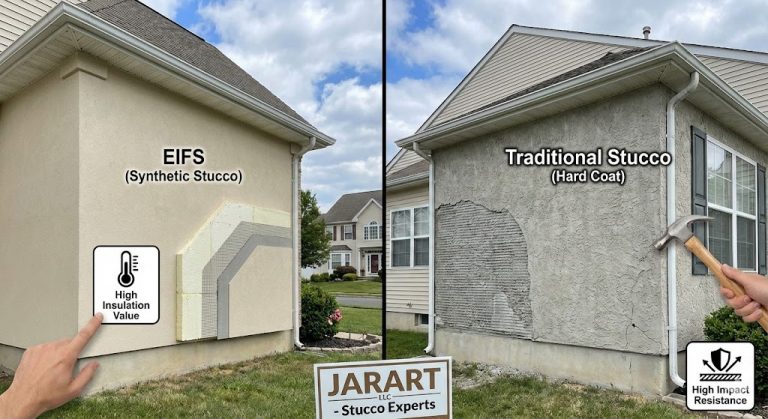
- Impact Resistance: Traditional stucco dries to a rock-hard finish. It is incredibly durable against physical impact (e.g., hail, stray baseballs, or heavy landscaping equipment).
- Breathability: Being porous, it can absorb and release moisture, which helps keep the wall system dry if designed correctly.
- Fire Resistance: Cement doesn’t burn, offering excellent fire protection.
The Drawback for NJ Homeowners:
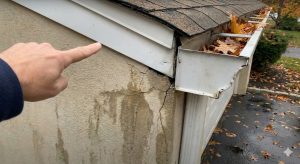
The main downside is its rigidity. In our Northeast climate, the freeze-thaw cycles can cause the ground and building materials to expand and contract. Because traditional stucco doesn’t flex, it is prone to hairline cracks over time, which require maintenance to prevent water intrusion.
What is EIFS (Synthetic Stucco)?
EIFS stands for Exterior Insulation and Finish System. It was developed in post-war Europe to repair buildings and improve insulation, gaining popularity in the US in the 1980s.
How it works:
Unlike traditional stucco, EIFS is a multi-layered system. It consists of:
- A foam insulation board (attached to the wall).
- A base coat reinforced with fiberglass mesh.
- A textured acrylic finish coat.
The EIFS Advantage:
- Superior Energy Efficiency: This is the biggest selling point. The foam layer wraps your home in a “thermal blanket,” significantly reducing thermal bridging. In New Jersey winters, an EIFS home is noticeably warmer and cheaper to heat (offering R-values from R-4 to R-5.6 per inch).
- Flexibility: The acrylic polymers make EIFS flexible. It can expand and contract with changing temperatures without cracking, keeping your exterior looking pristine for longer.
- Design Versatility: Because the finish is acrylic, it comes in limitless colors and textures that don’t fade as easily as painted cement.
The Considerations:
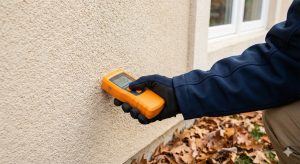
EIFS is softer than hard coat. While durable, it can be damaged by sharp impacts or even woodpeckers (who like the hollow sound). Additionally, EIFS is a non-breathable barrier system. This means professional installation with proper drainage channels is critical. If water gets behind it, it needs a way out.
Head-to-Head Comparison: Hard Coat vs. EIFS
To help you decide, here is how they stack up in key categories:
| Feature | Traditional Stucco (Hard Coat) | EIFS (Synthetic Stucco) |
| Durability | High impact resistance (Rock hard). | Flexible, resists cracking, but softer surface. |
| Insulation | Low (R-value ~0.20). Offers little thermal protection. | High (R-value ~4.0+). Drastically lowers energy bills. |
| Weight | Heavy (requires sturdy framing/foundation). | Lightweight (suitable for most structures). |
| Cost | Generally lower material cost, labor-intensive. | Higher initial investment, pays back in energy savings. |
| Water | Absorbs/releases moisture (“breathes”). | Water barrier (requires precise sealing). |
The “Stucco Fear”: Why Installation Matters More Than the System
You may have heard horror stories about EIFS causing moisture damage in the 1990s. Here is the reality: The failures were almost never due to the material itself, but due to inexperienced contractors failing to install proper flashing and drainage.
Whether you choose Hard Coat or EIFS, the longevity of your facade depends 100% on the craftsmanship.
At JARART LLC, we treat every project—from a single-family home to commercial giants like Marriott and Hyatt—with the same rigorous standards.
- We use only trusted brands like Sto, Dryvit, and Senergy.
- We ensure proper flashing around windows and doors (the #1 spot for leaks).
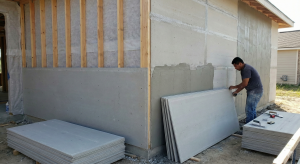
- We offer Cement Board Stucco systems for those needing a hybrid of strength and moisture protection.
Which One Should You Choose?
- Choose EIFS if: You want to lower your heating/cooling bills, you prefer a modern look with flexible design options, and you want a facade that resists cracking in changing temperatures.
- Choose Traditional Stucco if: You live in a high-traffic area where impact damage is likely, you prefer the “old-world” aesthetic, or you are matching an existing masonry structure.
Ready to Upgrade Your Exterior?
Still not sure which system fits your property? Let’s take a look together.
Contact JARART LLC today for a Free Estimation.
We will inspect your property, discuss your design goals, and recommend the best system for your budget and lifestyle.
📞 Call us at: (609) 375 7155
📍 Serving: New Jersey & Pennsylvania